Beyond the battlefield—using decision-support AI for disaster preparedness and relief

In less than two weeks in the autumn of 2024, two massive hurricanes hit Florida, wreaking havoc in multiple states—including in some places you wouldn’t expect, like the mountains of North Carolina. These two storms made history as back-to-back behemoths causing an estimated $50B in damage apiece and claiming nearly 250 souls combined.
As natural disasters increase in both number and intensity, AI is emerging as a useful tool for disaster risk management and disaster recovery. In fact, for the first time, the Army’s 18th Airborne Corps recently applied their battlefield AI decision support capabilities to map road closures, cellular outages, supply needs and other data in real time support of FEMA in the wake of Hurricane Helene.
How AI can help in a disaster.
The Army is using the decision-support AI they normally use for conflict scenarios to support disaster response. The same principles apply. The Army sorts through available data to make quick, on-the-ground decisions, such as where to send medical supplies, how many truckloads of water to take into storm-ravaged areas and other tactical and logistical concerns.
The same AI the DoD uses for conflict management and intelligence also provides many possibilities for disaster preparedness and response, including:
- Early warning. Identify the subtle signs of impending crises, such as weather patterns, at-risk areas, and populations.
- Disaster prevention. Implement solutions to mitigate or prevent disaster, such as installing flood barriers or early warning systems.
- Decision support. Provide real-time information to help response teams locate resources and prioritize actions.
- Damage assessment. Analyze geospatial data to identify the extent of damages after a disaster by comparing pre- and post-disaster aerial or satellite imagery.
- Recovery response. Analyze data on damages and resource availability to formulate fair and efficient recovery plans.
- Medical support. Provide immediate support for basic healthcare and psychological needs.
- Long-term preparedness. Identify areas of emerging vulnerability to predict and plan for emergencies, as well as recommend sustainable solutions.
- Evacuation plans. Predict how people will evacuate out of a certain region.
As capabilities mature, the applications of decision-support AI increase.
Climate threats are quickening and AI decision-ready technology is keeping pace. Multiple recent AI innovations have caught the eye of agencies addressing everything from disaster relief to child exploitation. Primer is one of the products opening new doors to address both foreign and domestic threat scenarios, including disaster preparedness and relief, political unrest, immigration and other pressing concerns.
By accessing vast amounts of data and interpreting it in real-time, preparedness and relief workers can use these innovations to gain real-time situational awareness during natural disasters. This can help prioritize responses, track impact in real time, and allocate resources more effectively. With these capabilities, analysts can address missions in ways they couldn’t just a couple years ago, including:
- Operating in both DDIL and multi-source environments—Bringing data and intelligence sources such as weather data, news reports, social media, eyewitness reports, governmental data, climate modeling, reconnaissance data, chatbots and more into the decision-set without delay.
- Searching with the power of AI—Uncovering critical insights with AI that understands your questions in everyday language, scanning millions of public and proprietary documents at lightning speed.
- Deploying LLMs alongside RAG—Retrieving relevant data from traditional and non-traditional sources to generate reliable and actionable data.
- Gaining insights with reduced hallucination risk—Primer’s RAG-V cuts hallucinations in half compared to state-of-the-art RAG systems, helping you focus on the best tactics and logistics with clarity and confidence.
All of this supports faster, more accurate and more confident decision-making in times of crisis. When it comes to natural disasters, we may not be able to stop “the enemy” in its tracks. But we can help government and aid organizations prepare and respond faster and better by analyzing all-source intelligence with the help of AI.
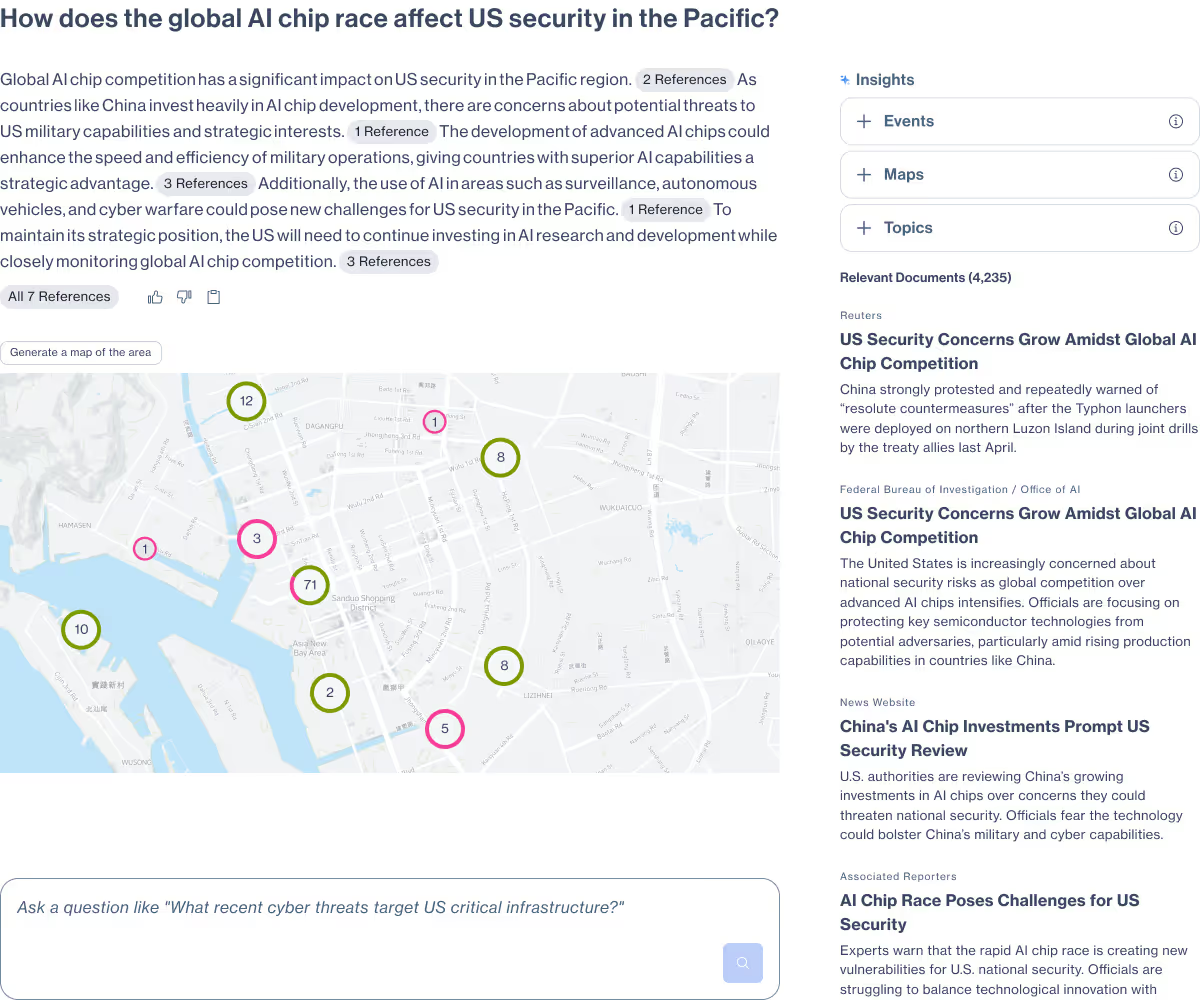
Primer Delta
Informed, defensible analysis
Delta is a secure AI platform that helps analysts and mission teams across the Intelligence Community, Defense, and Civilian agencies analyze massive volumes of unstructured data. It transforms fragmented reports, proprietary data, and open-source information into structured, traceable insight that supports faster, defensible decision-making.
Primer Command
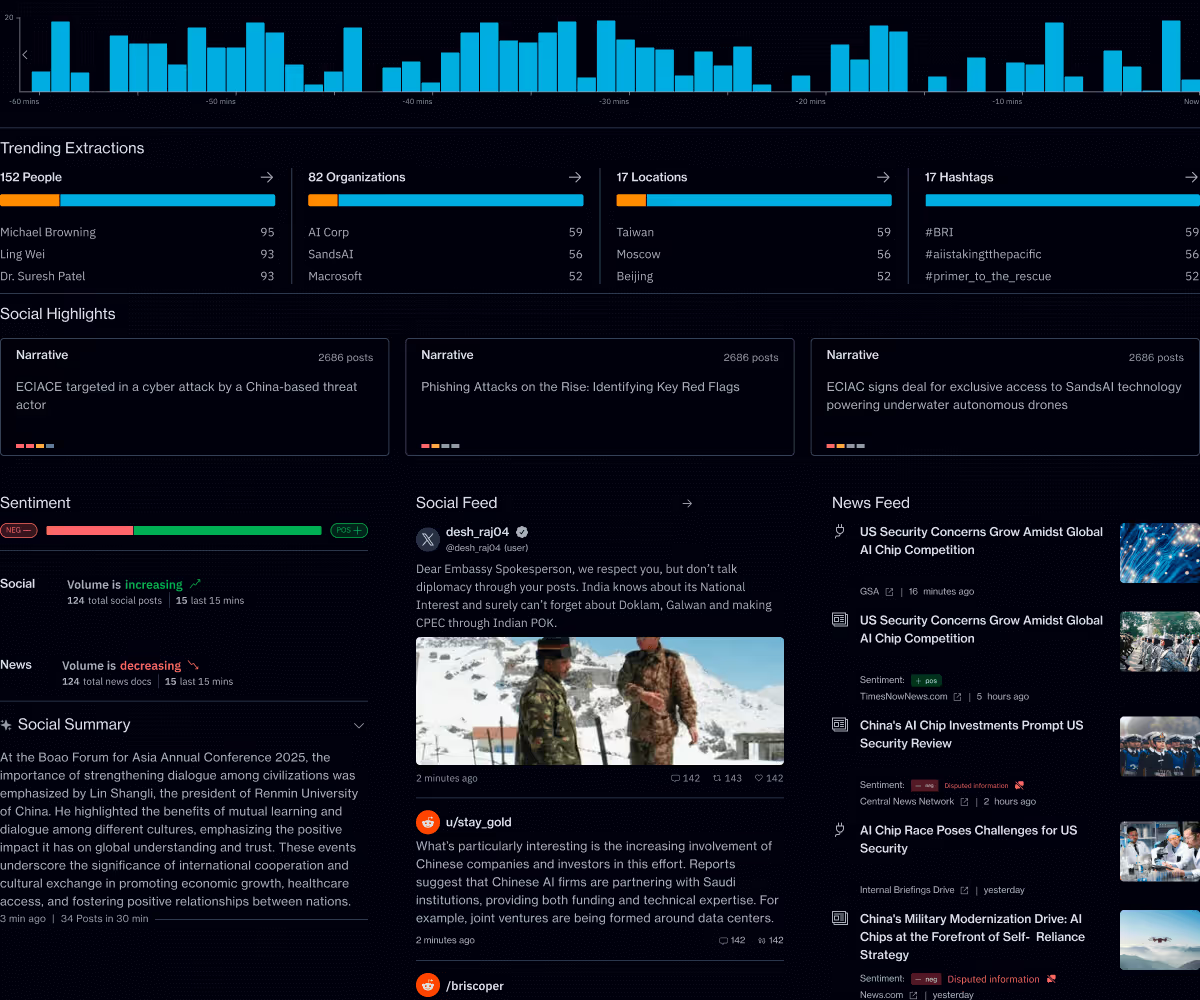
Real-time operational clarity
Primer Command is an AI-powered monitoring platform that helps mission teams keep track of narratives, track evolving topics, and detect emerging threats across global news and social media. It provides real-time visibility into the information environment so leaders can understand events as they unfold.