The future of AI in healthcare

Data chaos to AI clarity and savings: Tyler Johnson on trust, security, and the future of AI in healthcare
For Tyler Johnson, Principal Sales Engineer at Primer, the real opportunity is in the unseen: turning mountains of unstructured text into actionable insights, all while protecting the privacy and security of the people behind the data.Speaking at FedInsider’s recent healthcare technology panel, Johnson cut through the noise on AI’s promise and pitfalls.
The data problem no one sees
Healthcare is drowning in data—but not the kind that’s neatly organized in spreadsheets. Johnson explained that 80 to 90 percent of enterprise data, especially in medicine and government, is unstructured. Think doctors’ notes, case reports, discharge summaries, clinical trial feedback, or even patient-submitted forms.Traditional AI approaches are great at handling structured data—numbers, codes, and clean datasets. But when the bulk of valuable insight hides in text, audio, or free-form notes, those models miss the mark. Primer’s mission, Johnson emphasized, is to stitch structured and unstructured data together into a single, evidence-based narrative that supports better, faster decisions.
AI as an assistant, not a replacement
In Johnson’s view, AI raises the bar, doesn’t replace human expertise—it removes tedious, manual tasks so doctors, nurses, and administrators can focus on the decisions only they can make.For a primary-care provider, that might mean shifting from reactive, visit-to-visit treatment to predictive, lifecycle-based care. With the right AI tools, a clinician could quickly see the complete patient story—merging lab results, historical notes, and imaging reports into a coherent view—without wading through dozens of disconnected systems.
Trust and the cultural curve
But technology isn’t enough. “There’s a cultural learning curve,” Johnson noted. AI adoption in healthcare isn’t just about algorithms—it’s about trust.The key is keeping humans in the loop and grounding AI outputs in source truth so every answer can be traced back to its origins.He pointed to Primer’s techniques like retrieval-augmented generation (RAG) that help models pull from verified datasets rather than relying purely on what they’ve been trained on. In high-stakes domains like patient care, that grounding is essential.
Security and privacy come first
Johnson underscored that HIPAA compliance, single-tenant model hosting, and internal AI ecosystems are all possible today—and necessary to earn and maintain trust.Today’s best-in-class AI solutions can live entirely inside an organization’s secure environment, with no risk of data leakage to outside models.When combined with strong metadata management, data cleansing, and governance frameworks, AI becomes not just secure—but useful. Without those foundations, Johnson warned, even the most accurate AI outputs can fall flat if they aren’t actionable to the end user.
AI in action: Fraud detection and prevention
Johnson also pointed to a powerful public-sector application: using AI to combat fraud, waste, and abuse in healthcare systems. With the Department of Justice prioritizing fraud prevention—and new mandates for AI adoption—there’s a growing push to move from reactive investigations to predictive pattern recognition.Instead of combing through mountains of claims after fraud has already occurred, AI models can spot suspicious patterns early—flagging anomalies in claims, payments, or provider behavior for review. The benefits are clear:
- Earlier detection means preventing fraud before it escalates
- Lower costs free up resources for patients who truly need care.
- Higher quality across the system benefits taxpayers and providers alike.
This shift relies on the same principle Johnson emphasized earlier: while predictive models often need structured data, most of the source material—like case files or audit notes—is unstructured. Extracting structured entities from that unstructured text can dramatically boost the accuracy and value of predictive models. It’s not just about finding fraud faster—it’s about making the entire healthcare system more efficient and equitable.
Bringing it all together
Tyler Johnson’s perspective is a reminder that AI in healthcare isn’t just about futuristic capabilities—it’s about making sense of data we already have, building trust through transparency, and ensuring privacy every step of the way.In Primer’s work with government and healthcare organizations, these principles aren’t optional—they’re the foundation. From transforming unstructured text into real-time, evidence-based intelligence to deploying AI securely within the strictest regulatory frameworks, Primer is helping agencies and providers see what’s possible when technology works hand-in-hand with cutting-edge expertise of medical professionals.
Learn more about how Primer’s AI solutions can help your organization unlock the value of unstructured data—securely, ethically, and at scale.
Primer Delta
Informed, defensible analysis
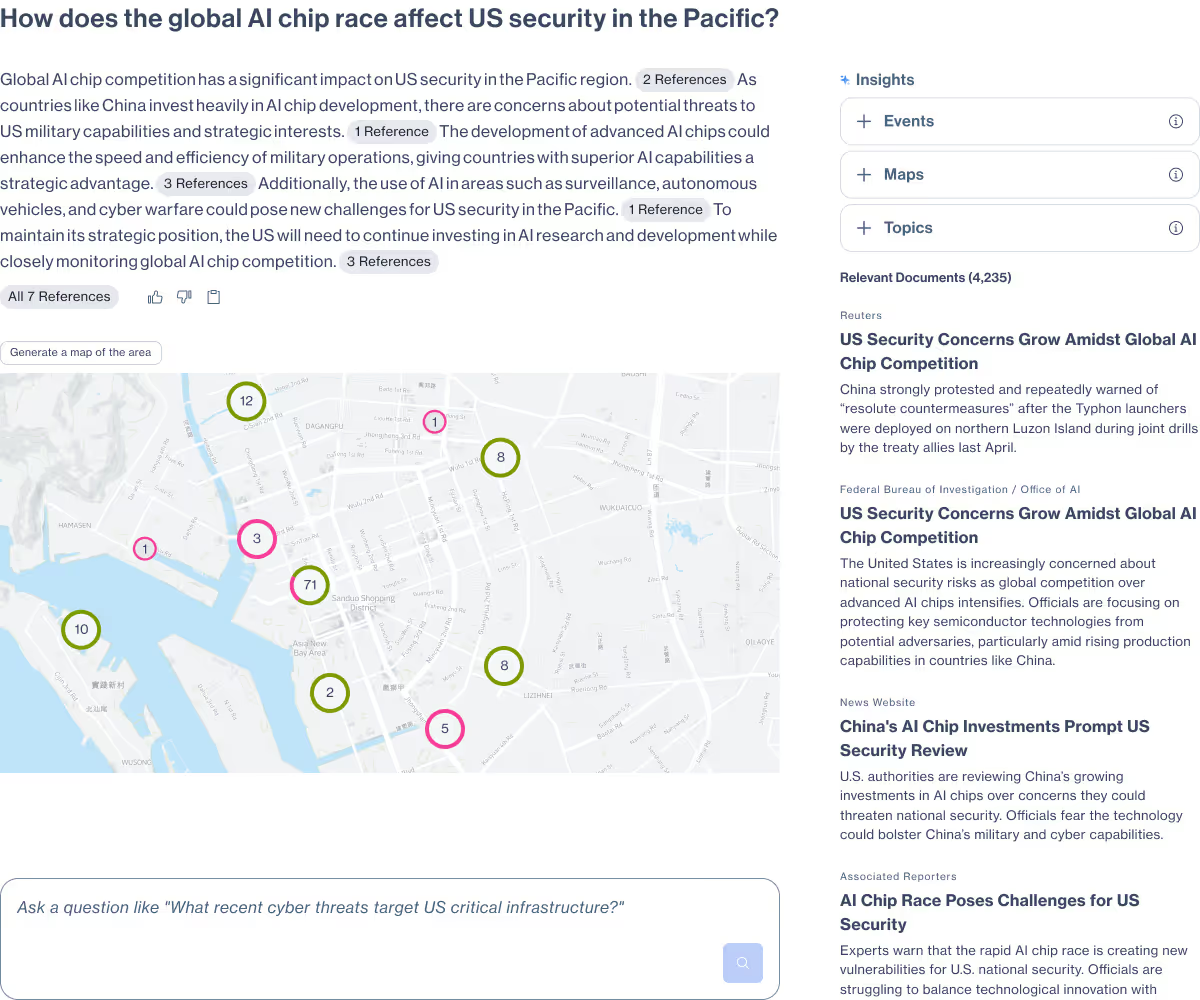
Delta is a secure AI platform that helps analysts and mission teams across the Intelligence Community, Defense, and Civilian agencies analyze massive volumes of unstructured data. It transforms fragmented reports, proprietary data, and open-source information into structured, traceable insight that supports faster, defensible decision-making.
Primer Command
Real-time operational clarity
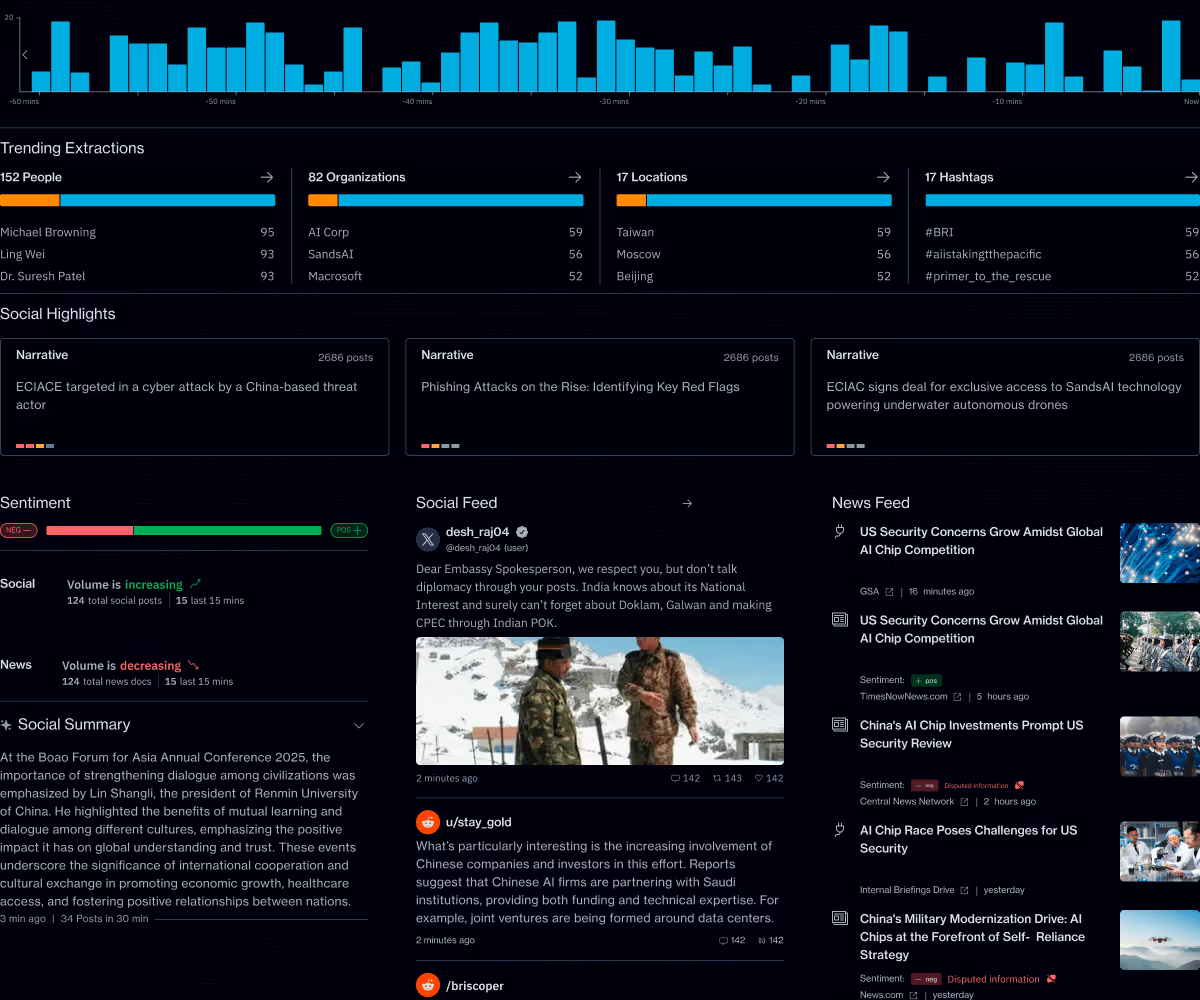
Primer Command is an AI-powered monitoring platform that helps mission teams keep track of narratives, track evolving topics, and detect emerging threats across global news and social media. It provides real-time visibility into the information environment so leaders can understand events as they unfold.