Advancing AI in Defense
For centuries, technological superiority has determined the outcome of conflicts. From the advent of nuclear weapons to the precision-guided munitions that redefined modern battlefields, military power has been shaped by breakthrough innovations. Today, artificial intelligence (AI) stands at the center of a new arms race—one that extends beyond national defense into the realm of geopolitical influence and economic dominance.
AI as the Next Technological Offset
A "technological offset" refers to a breakthrough so transformative that it redefines military dominance, making conventional strategies obsolete. In the past, nuclear deterrence, stealth technology, and precision-guided weapons played this role. Today, artificial intelligence is emerging as the next offset—one that accelerates both battlefield operations and high-level strategic decision-making.Unlike past offsets, which were tied to specific weapons or platforms, AI’s impact is far-reaching. It enhances intelligence analysis, fortifies cybersecurity, drives autonomous systems, and reshapes electronic warfare. Nations that successfully integrate AI into their defense ecosystem won’t just gain an edge in combat—they’ll influence the broader geopolitical landscape.
The Investment Surge in Defense AI
Investment in AI-driven defense technology is accelerating at an unprecedented pace. In the past year alone, billions have been poured into AI startups, with a growing focus on national security applications. Venture capitalists and defense contractors alike are recognizing the opportunity, but the learning curve is steep. Unlike traditional software startups, defense technology companies must navigate complex procurement processes, regulatory hurdles, and long development cycles before seeing a return on investment.Government funding is also increasing, with large-scale AI initiatives being compared to historical efforts like the Manhattan Project. While not yet at the same scale, the trend suggests that AI investment could reach similar levels as global tensions rise. The growing emphasis on AI-driven deterrence strategies further underscores the importance of maintaining a technological edge.
The Role of AI in Future Conflicts
Warfare is no longer solely about firepower; it is about decision dominance. AI enables militaries to process vast amounts of data in real time, identifying threats, predicting adversarial movements, and automating critical processes. As autonomous systems become more advanced, the role of AI in decision-making will continue to expand—from intelligence gathering to battlefield coordination.One of the most significant shifts will be in autonomous warfare. Drone swarms, AI-powered surveillance, and real-time battlefield simulations will play a crucial role in future conflicts. The ability to adapt AI models in response to an adversary’s tactics will become a decisive factor in military engagements. As seen in recent conflicts, even small AI-driven innovations, such as improved target recognition in drones, can have an outsized impact.However, with this rapid evolution comes an important question: How can nations ensure that AI is developed responsibly? The balance between deterrence and escalation will be critical. AI will not only be used to enhance military capabilities but also to shape international stability. The goal is to create a deterrence effect—where the mere presence of AI-driven defense capabilities discourages conflict before it begins.
Looking Ahead: National Strategy and Global Stability
As AI reshapes the defense landscape, countries must adapt or risk falling behind. The integration of AI into national security is no longer a theoretical debate—it is an immediate reality. Nations that fail to invest in AI-driven defense capabilities may find themselves at a strategic disadvantage, reliant on outdated systems in a rapidly evolving conflict environment.This shift is not just about technology; it is about national strategy. AI-powered defense must be paired with ethical considerations, ensuring that these advancements contribute to stability rather than unchecked escalation. While AI will never replace human decision-making entirely, it will fundamentally alter how defense strategies are developed and executed.For governments, defense agencies, and industry leaders, the challenge is clear: Invest in AI, collaborate across sectors, and ensure that technological superiority is maintained—not as a tool for aggression, but as a safeguard for national security. The AI arms race is already underway. The only question that remains is who will lead it.
Primer Delta
Informed, defensible analysis
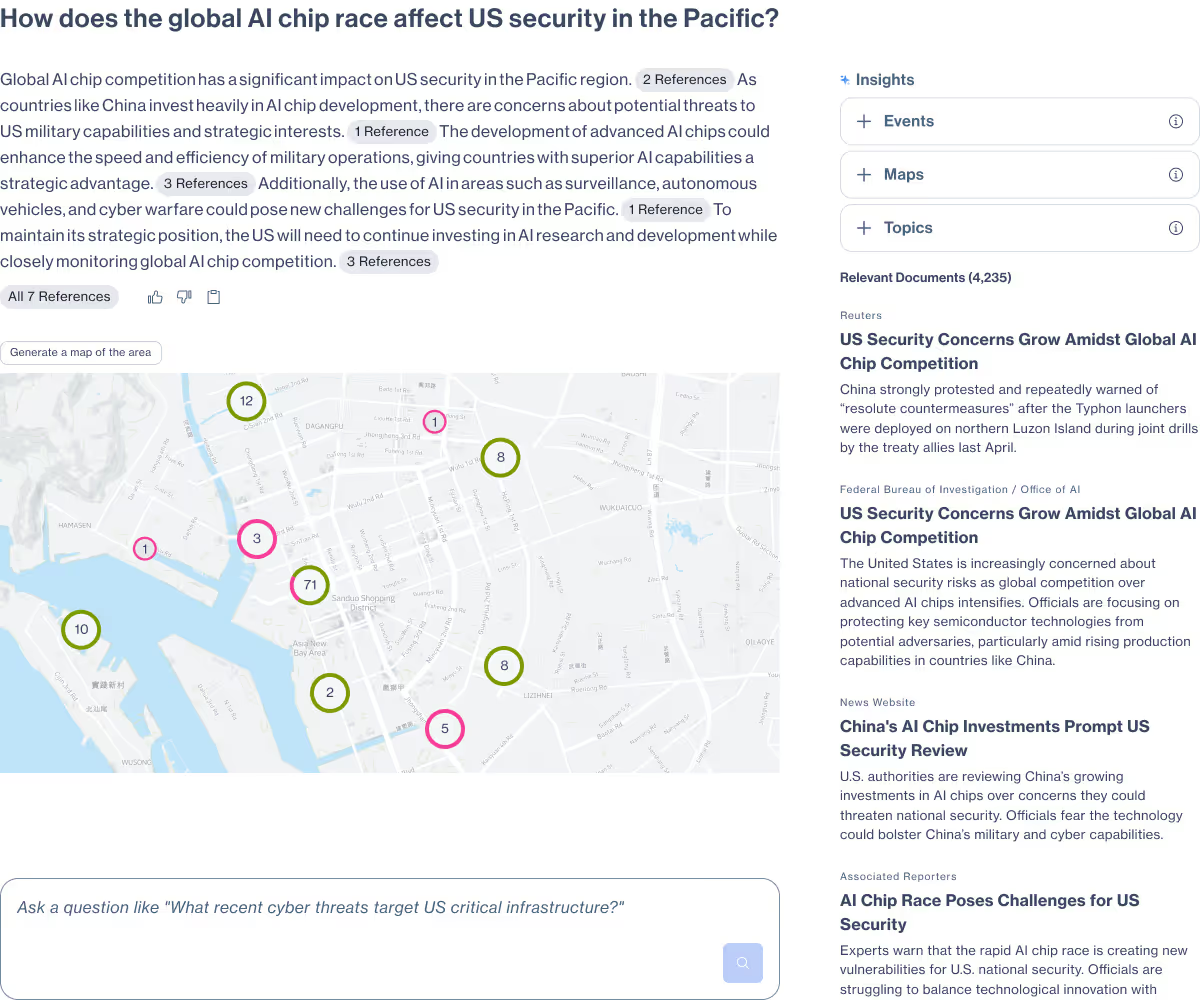
Delta is a secure AI platform that helps analysts and mission teams across the Intelligence Community, Defense, and Civilian agencies analyze massive volumes of unstructured data. It transforms fragmented reports, proprietary data, and open-source information into structured, traceable insight that supports faster, defensible decision-making.
Primer Command
Real-time operational clarity
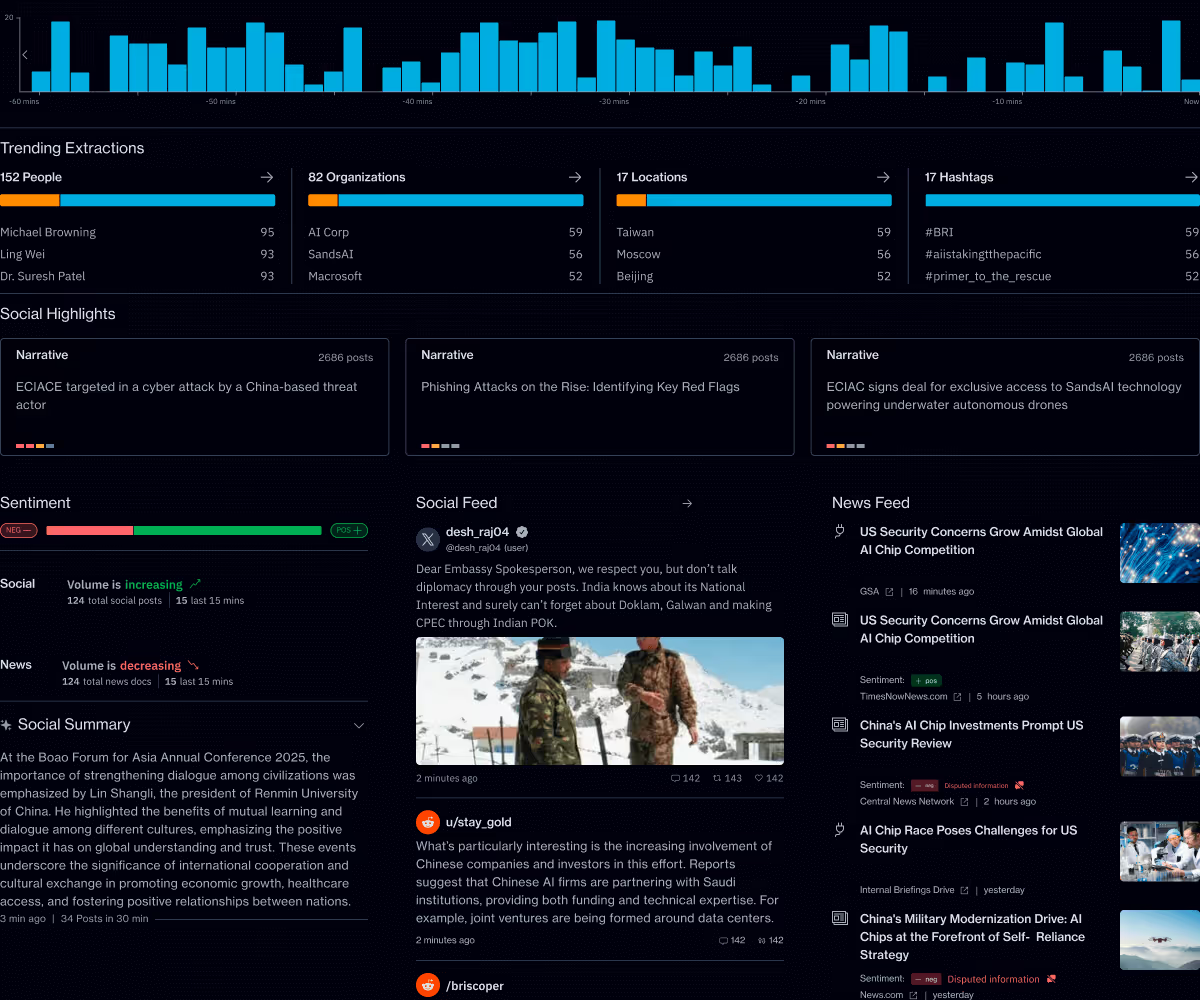
Primer Command is an AI-powered monitoring platform that helps mission teams keep track of narratives, track evolving topics, and detect emerging threats across global news and social media. It provides real-time visibility into the information environment so leaders can understand events as they unfold.